
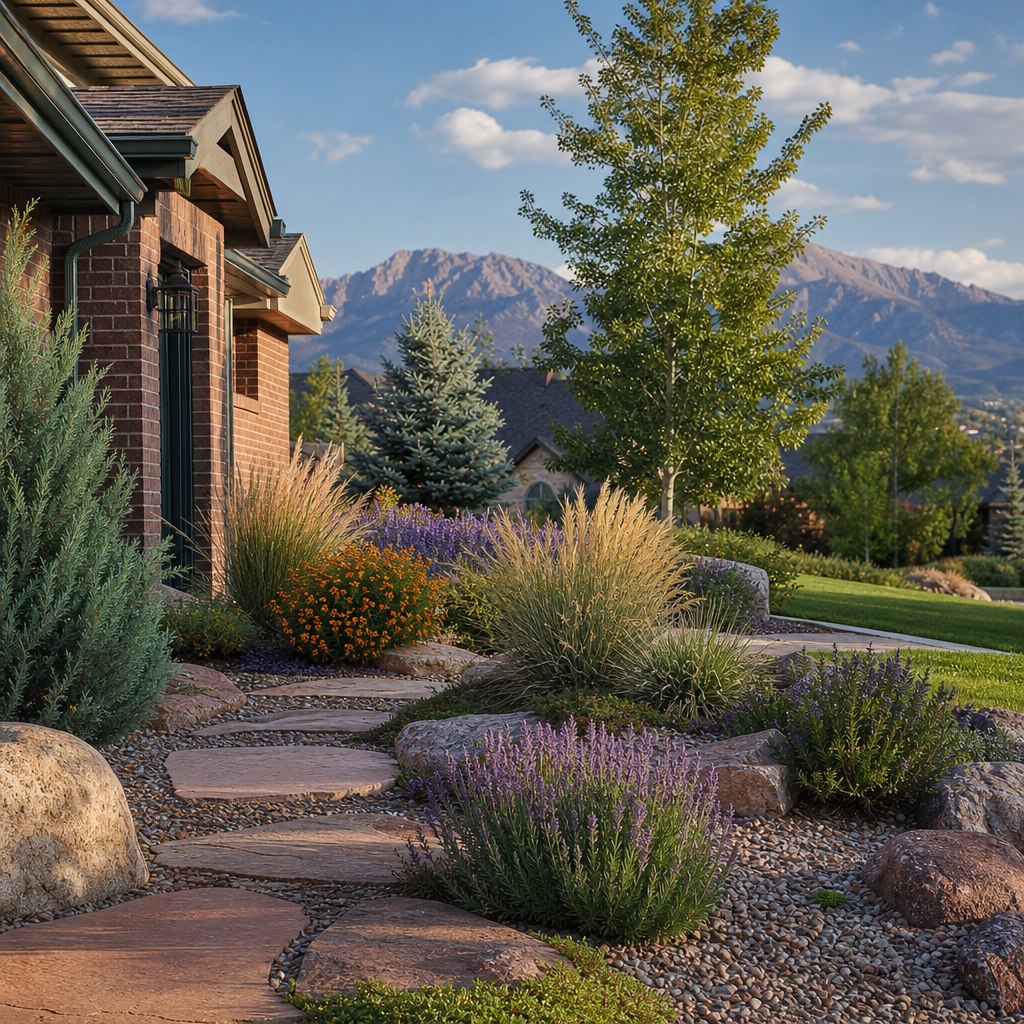
Repairing a Front Range Yard: Drainage, Compaction, Then Planting is a Front Range decision guide for Colorado Springs property owners. It ties the next step to verified local water, soil, season and plant context while leaving uninspected conditions explicitly unresolved.
Read drainage before breaking compacted soil
Compacted Front Range soil and a drainage failure are related but not interchangeable. Observe where water enters, where it stalls and what lies downslope before specifying tillage or amendment.
Test pH before prescribing organic matter
Colorado soils commonly lean alkaline, and values above 7.5 can complicate nutrient management. A measured result is more useful than a standard amendment recipe.
Restore irrigation coverage before planting
A new plant palette cannot compensate for broken coverage, runoff or a leaking valve. Make the repaired irrigation map part of the renovation scope before quantities are finalized.
Phase finishes after the subsurface work
Edging, decorative rock and plant upgrades belong after compaction, grading and water movement are resolved. A phase line keeps those visible finishes from consuming the budget needed for the actual failure.
Front Range field record for this renovation
Build the Colorado Springs field record from elevation, slope, exposure and irrigation performance. Mark hard-surface runoff, compacted areas, shaded snow-retention pockets and any lawn above the 7,000-foot warm-season boundary. Note which three watering days were chosen and whether every station can operate before 10 a.m. or after 6 p.m. during the summer rule period. A Front Range recommendation should be traceable to those observations, not to a citywide assumption about soil, hardiness zone or grass type. For this renovation page, circle the observation that would change the next decision and name who will verify it.
Retain elevation, runoff, compaction and controller evidence with the Front Range proposal so later work can be traced to the condition that justified it. For this renovation decision, the current authority and photographed property condition control.
property detail 3 in the property planning sequence is timing choices. Record the evidence needed to pass that property detail, the person making the decision, and the acceptance note that closes it before the next stage begins.
Decision property detail 1 in the Property Planning sequence: helpful landscape guide
property detail 2 in the property planning sequence is helpful landscape guide. Record the evidence needed to pass that property detail, the person making the decision, and the acceptance note that closes it before the next stage begins.
Move to the next Front Range Property note
Build a Clear Scope for Your Front Range Property
Tell Peak City Landscaping what is happening on the site and what you need the finished space to do. Those details provide the starting point for a Colorado Springs project estimate.