
Sprinkler & Irrigation Systems in Colorado Springs, CO
A well-built irrigation system delivers the right amount of water to each part of a property, on a schedule that fits both the plants and the rules, without wasting water on pavement or on ground that does not need it. In Colorado Springs, where watering is limited to three days a week and daytime watering is restricted for much of the growing season, system design and scheduling do more work than raw run time ever can.
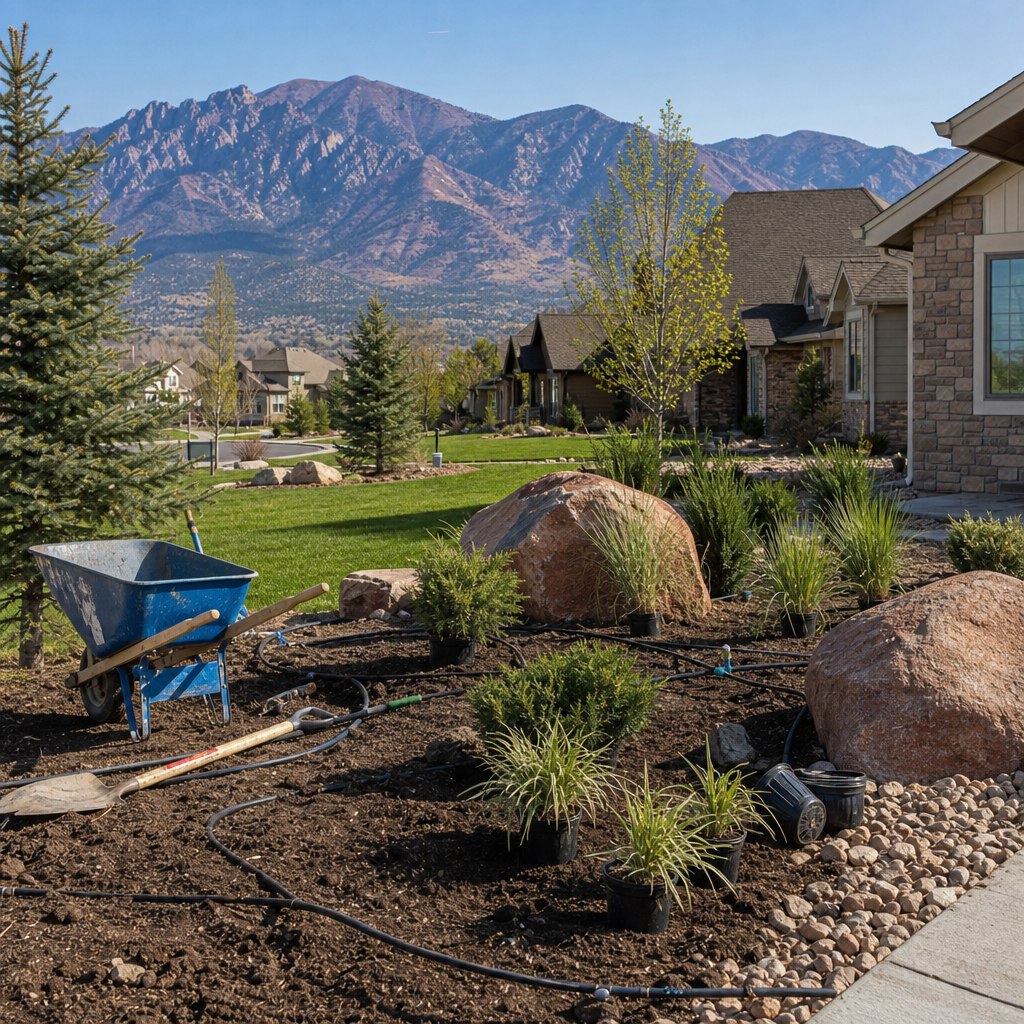
Decision property detail 4 in the Property Planning sequence: guide
Colorado Springs Utilities allows watering up to three days a week and, from May 1 to October 15, only before 10 a.m. or after 6 p.m. Those are workable rules, but they remove the option of compensating for a poorly designed system by simply watering more often. If coverage is uneven or zoning is wrong, the usual response — run everything longer — overwaters the areas that were already fine in order to rescue the areas that were not.
Two further rules bear directly on system condition. Water must not pool on hard surfaces or run down gutters, and leaking sprinkler systems must be repaired within 10 days. Both point at the same thing: a system in poor repair is not merely wasteful here, it is out of step with the rules.
Altitude and climate add their own demands. Intense sun and low humidity increase evaporative loss from anything sprayed into the air, drying winds distort spray patterns, and hard freezes make winterisation non-optional.
Decision property detail 3 in the Property Planning sequence: guide
Specify the required Colorado Springs backflow protection and connection inspection in the irrigation scope.
Zoning by need. Turf, beds, and trees have genuinely different requirements and belong on different zones. Sun and shade differ too, as do slopes and flat ground. Zoning is where efficiency is designed in or designed out.

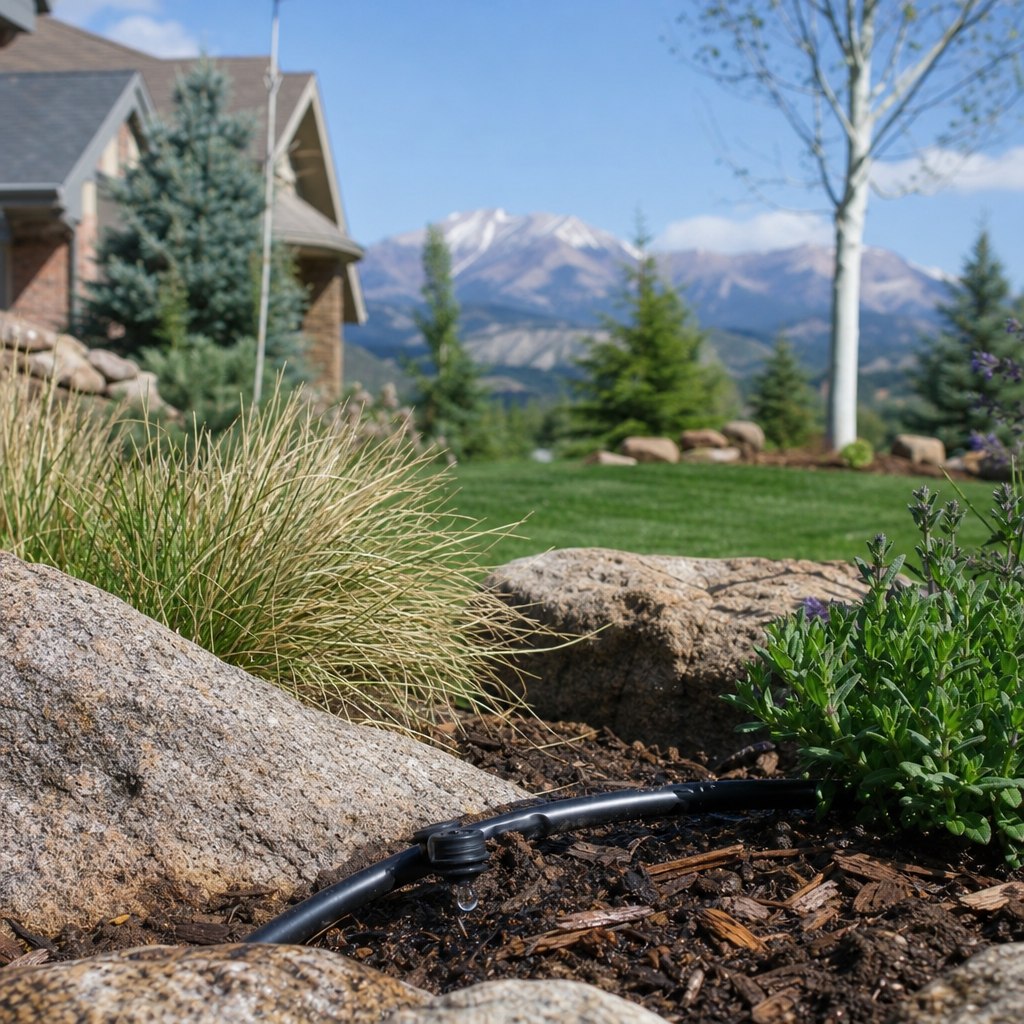
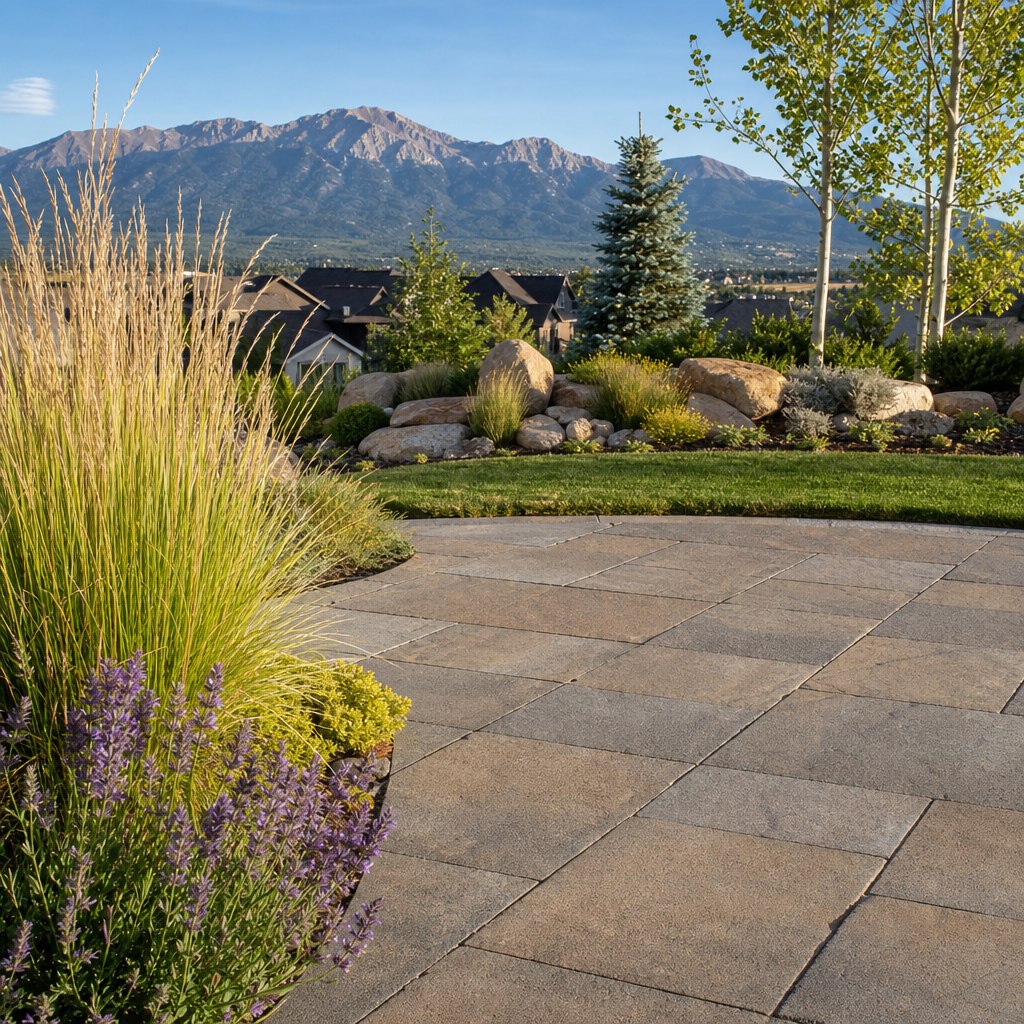
Correct head selection and spacing. Heads are matched to the area they serve and spaced for head-to-head coverage, so the pattern overlaps properly instead of leaving dry arcs that get compensated for with longer run times.
Drip for beds. Planting beds are far better served by drip than by spray. It puts water at the root zone, wastes nothing to evaporation, and produces no overspray onto walks and drives.
A controller worth having. Modern controllers adjust seasonally rather than running one schedule year-round. The single most common source of waste we find is a controller still running June settings in September.
Pressure management. Excessive pressure atomises water into mist that blows away before it lands. Regulated pressure at the head is a quiet, cheap efficiency gain.
Scheduling within three days a week
Three days a week is ample for a healthy landscape, provided the watering is deep. Deep, infrequent cycles wet the full root depth and encourage roots downward; frequent shallow watering produces shallow roots and a lawn that wilts the moment a cycle is missed.
On the heavy clay soils common along the Front Range, the technique that matters is cycle-and-soak: rather than one long run that overwhelms the soil’s intake rate and sends water down the gutter, the zone runs in shorter cycles with soak time between them. The same total water goes on, but it goes in instead of running off — which also keeps you clear of the rule against water pooling on hard surfaces or flowing down gutters.
Decision property detail 1 in the Property Planning sequence: Budget Inputs
Cost depends on the property size, the number of zones, head count and type, whether this is a new installation or a repair, upgrade, or partial redesign, and what controller and backflow provisions are required. Trenching adds labour, and rocky ground adds more of it. Repairs and zone-by-zone upgrades are naturally far less than a full system. We assess and quote on site, because the number of zones alone can change the scope substantially.
Timeline
Repairs and adjustments are usually completed in a single visit. A new residential system or a significant redesign typically takes a few days depending on zone count and trenching. Commissioning is part of the work: every zone is run, coverage checked, heads adjusted, and the controller programmed for the current season and explained before we leave.
Decision property detail 2 in the Property Planning sequence: guide
If your water bill is high, your lawn has patches that never green up, water runs down the driveway when a zone runs, or your system has not been checked in several seasons, an assessment is worth more than a longer schedule. Many properties do not need a new system at all — they need zoning corrected, heads adjusted or replaced, beds converted to drip, and a controller programmed properly. That combination frequently delivers most of the available improvement at a fraction of a full replacement.
Local constraint: the Colorado Springs Utilities Water Wise Rules
Colorado Springs Utilities publishes six Water Wise Rules. You may water up to three days a week, Sunday to Saturday, choosing your own days. From May 1 to October 15, watering must be done before 10 a.m. or after 6 p.m. to reduce evaporation. Water must not pool on hard surfaces or flow down gutters. Leaking sprinkler systems must be repaired within 10 days. A shut-off nozzle is required when washing anything with a hose, and hard surfaces may be washed with water only where there is a public health and safety concern. A correctly zoned, well-maintained system makes every one of these straightforward to observe. (Source: Colorado Springs Utilities Water Wise Rules.)
Winterisation and spring start-up
This climate makes both non-negotiable. In autumn the system is drained and blown out so that water left in lines and heads cannot freeze and split them — skipping it risks damage across the whole system rather than at a single point. In spring the system is charged slowly, every zone is run, and each head is checked for freeze damage, misalignment, and blockage. The spring start-up is also the natural moment to catch the leaks the rules require to be repaired within 10 days, before the watering season is properly under way.
Frequently asked questions
How many days a week can I water? Up to three, Sunday through Saturday, and you choose which days. From May 1 to October 15, watering must be before 10 a.m. or after 6 p.m.
Water runs down my driveway when a zone runs. What is wrong? Usually the zone is applying water faster than the soil can take it, which is common on clay. Cycle-and-soak scheduling fixes most cases; misaimed or oversized heads account for much of the rest.
Can you repair a system you did not install? Yes. Repairs, head replacement, zone corrections, and controller reprogramming are routine work regardless of who installed the system.
Do I really need winterisation every year? Yes. Water left in the lines through a Colorado Springs winter will freeze and cause damage, and that damage is generally spread across the system rather than confined to one place.
Should my beds be on sprinklers? Generally not. Beds are better served by drip, which is more efficient and eliminates overspray onto walks and drives.
My lawn has dry patches even though I water a lot. Why? Almost always uneven coverage from head spacing, pressure, or misalignment. Watering longer compensates by overwatering everywhere else; correcting coverage fixes the actual problem.
Sources
Colorado Springs Utilities — Water Wise Rules: csu.org/water-wise-rules.
Get a free quote for sprinkler and irrigation work in Colorado Springs →
Project details and next steps
- No-Cost Scope ReviewThe initial scope review is offered without charge or a commitment to schedule work.
- Decision RecordThe approved scope and price are recorded before scheduling, with later changes documented separately.
Get a Free Quote
Note the grade, exposure, access, and Front Range project priorities.
Clarify the Front Range Work Area
Share the grade, exposure, access, timing, and intended use so the Colorado Springs scope can address the actual property.
Get a Free QuoteFrequently Asked Questions
Which exposure check comes first for sprinkler irrigation colorado springs in Colorado Springs?
Compare the property's sunny, shaded and wind-exposed areas before setting the sprinkler irrigation colorado springs scope. Also record slopes, downspout discharge and places where soil movement is visible, because one treatment may not suit every part of the lot.
Where can freeze-thaw movement alter this sprinkler irrigation colorado springs scope?
Edges, joints, compacted bases and drainage low points deserve a close look. The proposal should identify any movement already present and separate corrective preparation from appearance work so the owner can see what the site actually requires.
What makes two Colorado Springs sprinkler irrigation colorado springs proposals comparable?
Ask each proposal to state quantities, base or soil preparation, drainage handling, material specifications, access assumptions and final acceptance checks. Comparing those line items is more useful than comparing a single total with different work hidden underneath it.