
Xeriscaping in Colorado Springs, CO
Xeriscaping is water-wise landscape design: plants chosen for the local climate, soil prepared so it holds what it receives, efficient irrigation, and mulch or rock used deliberately rather than decoratively. In Colorado Springs it produces a landscape that looks good through a dry summer, survives the swings this altitude delivers, and fits comfortably inside Colorado Springs Utilities’ Water Wise Rules.
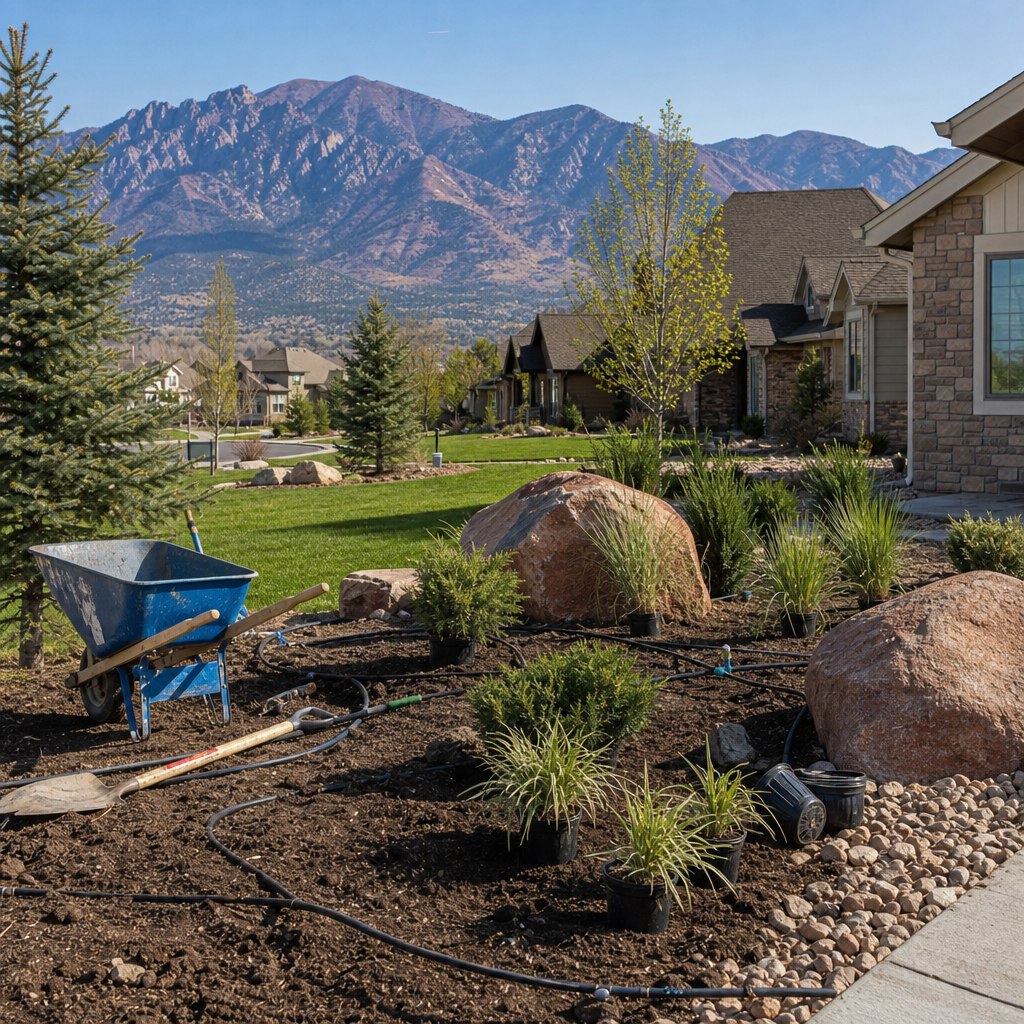
Decision property detail 4 in the Property Planning sequence: guide
The Front Range is semi-arid, sits high, and is unusually variable. Intense sun at altitude, low humidity, wide day-to-night temperature swings, drying winds, and precipitation that arrives unevenly through the year all work against a landscape designed for somewhere wetter. A conventional bluegrass lawn can be kept green here, but it is the single thirstiest thing on most properties, and it needs its heaviest watering in exactly the window when Utilities restricts daytime watering.
Xeriscaping is not a rock yard, and the distinction matters. It is a design approach that puts the right plant in the right place, groups plantings by water requirement so each zone can be watered properly, and keeps turf where turf earns its keep rather than spreading it wall to wall by default.
What a xeriscape conversion involves
Design and hydrozoning. Plants are grouped by water need so that a single zone can be irrigated correctly. Mixing a thirsty planting with a drought-tolerant one on a single zone means one of them is always watered wrongly.
Soil preparation. Front Range soils are frequently heavy clay, and clay is why so many well-intentioned plantings fail. Amending and preparing the soil so that it accepts water at a reasonable rate and holds it in the root zone is the least visible and most valuable stage of the whole job.
Turf reduction, not necessarily removal. Grass is retained where it is genuinely used and removed where it exists only to be looked at — parkways, slopes, narrow strips, and deep shade where it never thrived anyway.
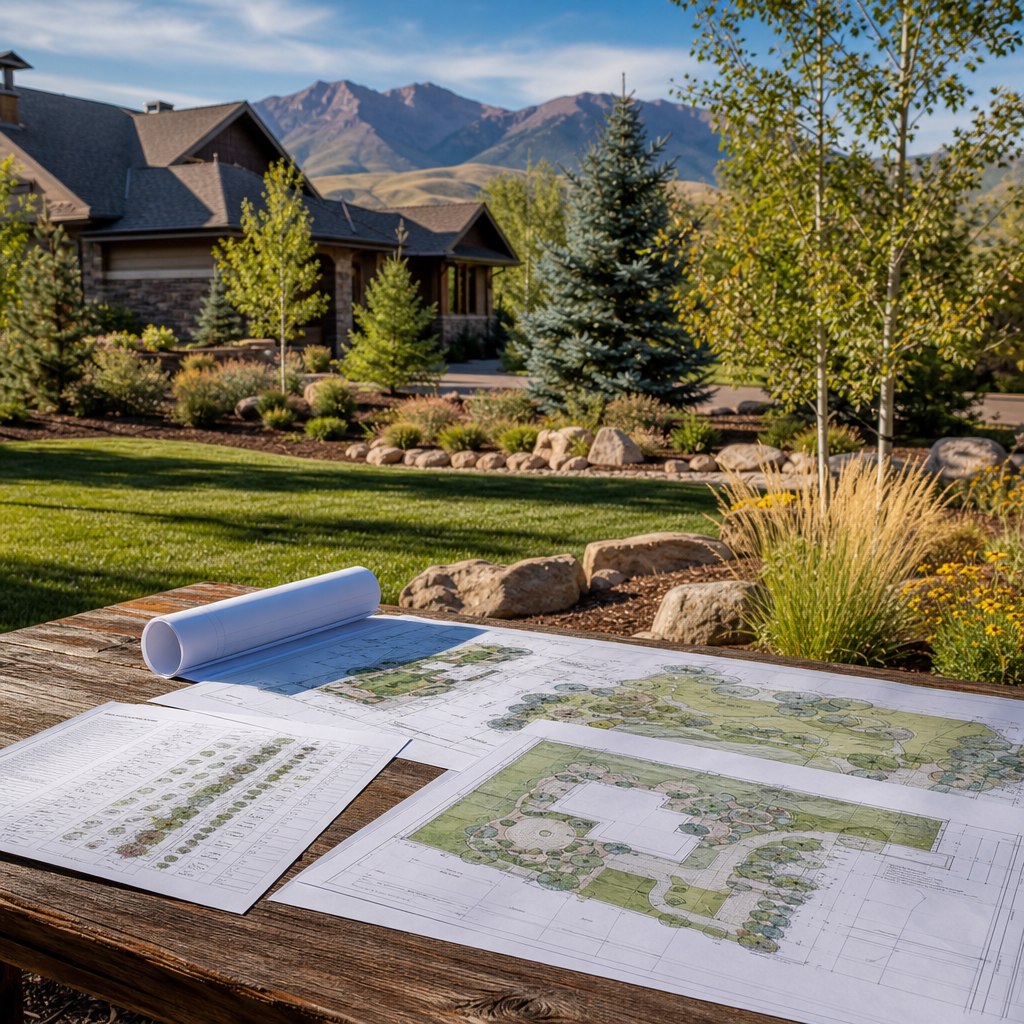
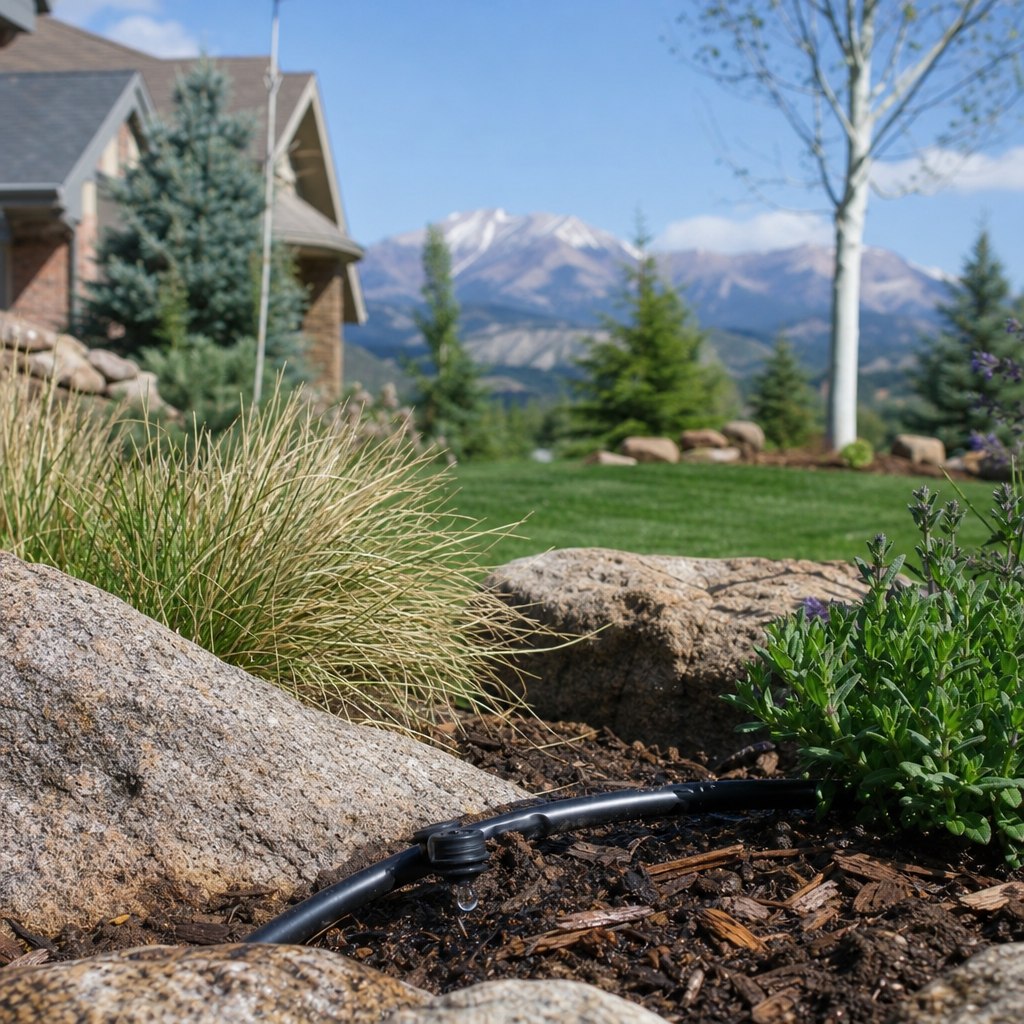
Efficient irrigation. Beds move to drip; any remaining turf keeps appropriate irrigation on its own zone and its own schedule.
Mulch and ground cover. Organic mulch over planting beds moderates soil temperature and slows evaporation. Rock is used where it serves a purpose rather than as a default surface.
Planting. Plants go in with room for mature size and are watered deliberately through establishment.
Design that works at altitude
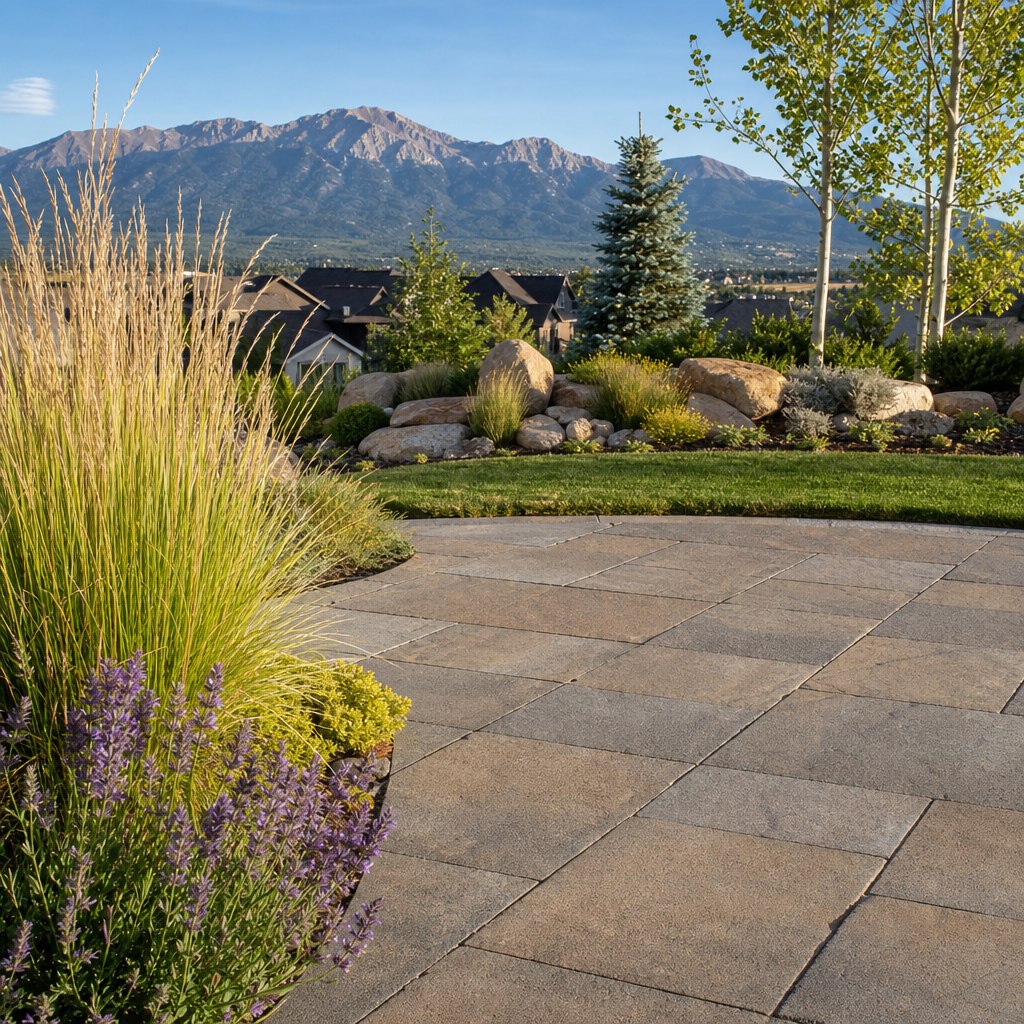
Successful Colorado Springs landscapes are layered and structured to handle both extremes: a hot dry stretch in summer, and a winter that can deliver heavy wet snow onto plants still carrying foliage. Trees and larger shrubs provide the frame, mid-height plantings carry the composition through the seasons, and perennials and ornamental grasses supply movement and seasonal colour.
The error to avoid is treating xeriscape as gravel with a few survivors in it. That version is glaring, radiates heat, and looks unfinished from the day it goes in. Properly designed, a water-wise landscape here can be genuinely lush — it simply achieves that with plants suited to the conditions rather than in spite of them.
Decision property detail 1 in the Property Planning sequence: Budget Inputs
Cost depends on the area being converted, how much turf and hardscape comes out, how much soil preparation the site needs, the plant and mulch selection, and the extent of the irrigation rework. Slope adds cost, and so does access, since material has to reach the work area by whatever route exists. Soil preparation is the item most often underestimated and the one that most determines whether the landscape thrives in year three. Phasing a large conversion across seasons spreads both work and cost. We quote on site.
Timeline
Most residential conversions run from a few days to a couple of weeks depending on What’s included: removal and haul-off, soil preparation, irrigation, edging and mulch or rock, then planting. Establishment follows — new plantings need consistent water through their first full season, after which their requirement drops substantially and permanently.
Decision property detail 2 in the Property Planning sequence: guide
Xeriscaping is the right call if your water bill is driven by landscape irrigation, if parts of your yard have never really thrived, or if you want a landscape that holds up through a dry August without constant attention. If you have children or dogs who genuinely use a lawn, keep that lawn — well-irrigated and on its own zone — and convert the areas that exist only to be looked at. That partial approach delivers most of the water saving with none of the loss of use.
Local constraint: the Colorado Springs Utilities Water Wise Rules
Colorado Springs Utilities publishes six Water Wise Rules that govern outdoor watering. You may water up to three days a week, Sunday to Saturday, and you choose which days. From May 1 to October 15, watering must be done before 10 a.m. or after 6 p.m. to reduce evaporation. Water must not pool on hard surfaces or flow down gutters. Leaking sprinkler systems must be repaired within 10 days. A shut-off nozzle is required when washing anything with a hose, and hard surfaces such as driveways, sidewalks and patios may be cleaned with water only where there is a public health and safety concern. A xeriscape is designed to sit well inside these rules rather than press against them. (Source: Colorado Springs Utilities Water Wise Rules.)
Grass selection if you are keeping some lawn
Colorado State University Extension identifies the cool-season grasses used for Colorado lawns as bluegrass, ryegrass and the fescues, and the warm-season options as buffalograss and blue grama. Elevation is a genuine constraint here: Extension guidance states that at elevations above 7,000 feet, warm-season grasses should not be used. That is directly relevant across this region, where properties in the higher communities west and north sit well above that line while much of the city proper does not.
Timing follows the same source. Cool-season grasses can be seeded from March through September, with the optimal window along the Front Range falling between mid-August and mid-September. Warm-season grasses are seeded April through July.
Decision property detail 3 in the Property Planning sequence: guide
A xeriscape needs seasonal attention rather than constant work: top up mulch as it breaks down, pull weeds before they seed, cut back perennials and ornamental grasses at the appropriate point in the year, and check drip emitters each spring for winter damage. Freeze-thaw cycles are hard on irrigation components here, which makes the spring check more valuable than it would be in a milder climate.
Frequently asked questions
Is xeriscaping just rocks? No. Xeriscaping is a design approach based on appropriate plants, prepared soil, and efficient irrigation. A gravel yard with a few plants in it is a common misreading of the idea, not an example of it.
How many days a week can I water in Colorado Springs? Up to three days a week, Sunday through Saturday, and you choose which days. From May 1 to October 15 watering must happen before 10 a.m. or after 6 p.m.
Will a xeriscape look brown in summer? Not if it is planted properly. The point is choosing plants that look their best under local conditions rather than plants that only look well when heavily watered.
Can I keep part of my lawn? Yes, and usually you should. Retaining a well-used, properly irrigated turf area while converting the decorative parts is the most practical outcome on most properties.
Does the clay soil matter that much? Yes. Heavy clay is the most common reason plantings underperform here. Preparing the soil properly is the difference between a landscape that establishes and one that struggles indefinitely.
What if my property is above 7,000 feet? Then warm-season grasses are off the table according to Extension guidance, and the planting palette shifts accordingly. Elevation is assessed as part of the design.
Sources
Colorado Springs Utilities — Water Wise Rules: csu.org/water-wise-rules. Colorado State University Extension — Renovating the Home Lawn (fact sheet 7.241): extension.colostate.edu.
Get a free quote for xeriscaping in Colorado Springs →
How much does landscaping cost in Colorado Springs?
Landscaping cost in Colorado Springs depends on the area being converted, how much turf and hardscape comes out, how much soil preparation the site needs, the plant and mulch selection, and the extent of the irrigation rework. Peak City Landscaping prices each of these inputs in its Property Planning sequence.
Project details and next steps
- No-Cost Scope ReviewThe initial scope review is offered without charge or a commitment to schedule work.
- Decision RecordThe approved scope and price are recorded before scheduling, with later changes documented separately.
Get a Free Quote
Note the grade, exposure, access, and Front Range project priorities.
Clarify the Front Range Work Area
Share the grade, exposure, access, timing, and intended use so the Colorado Springs scope can address the actual property.
Get a Free QuoteFrequently Asked Questions
Which exposure check comes first for xeriscape colorado springs in Colorado Springs?
Compare the property's sunny, shaded and wind-exposed areas before setting the xeriscape colorado springs scope. Also record slopes, downspout discharge and places where soil movement is visible, because one treatment may not suit every part of the lot.
Where can freeze-thaw movement alter this xeriscape colorado springs scope?
Edges, joints, compacted bases and drainage low points deserve a close look. The proposal should identify any movement already present and separate corrective preparation from appearance work so the owner can see what the site actually requires.
What makes two Colorado Springs xeriscape colorado springs proposals comparable?
Ask each proposal to state quantities, base or soil preparation, drainage handling, material specifications, access assumptions and final acceptance checks. Comparing those line items is more useful than comparing a single total with different work hidden underneath it.