
Decision property detail 4 in the Cleanup Scope sequence: helpful landscape guide
Yard cleanup clears leaves and debris, removes dead growth, cuts back perennials and shrubs, tidies beds, and leaves a property looking cared-for and far easier to maintain. In Colorado Springs the work is shaped by a short, intense growing season bracketed by two very different clean-up problems: autumn leaf fall arriving alongside early snow, and a spring reveal of everything winter did.
Decision property detail 5 in the Cleanup Scope sequence: helpful landscape guide
The seasonal pattern here is compressed. Autumn can deliver heavy wet snow while trees are still fully leafed, which means leaf fall and snow load arrive together rather than in sequence. Leaves left on a lawn under snow cover mat down into a dense layer that smothers the grass beneath and creates ideal conditions for disease to develop over winter. What emerges in spring is not simply an untidy lawn but a damaged one.
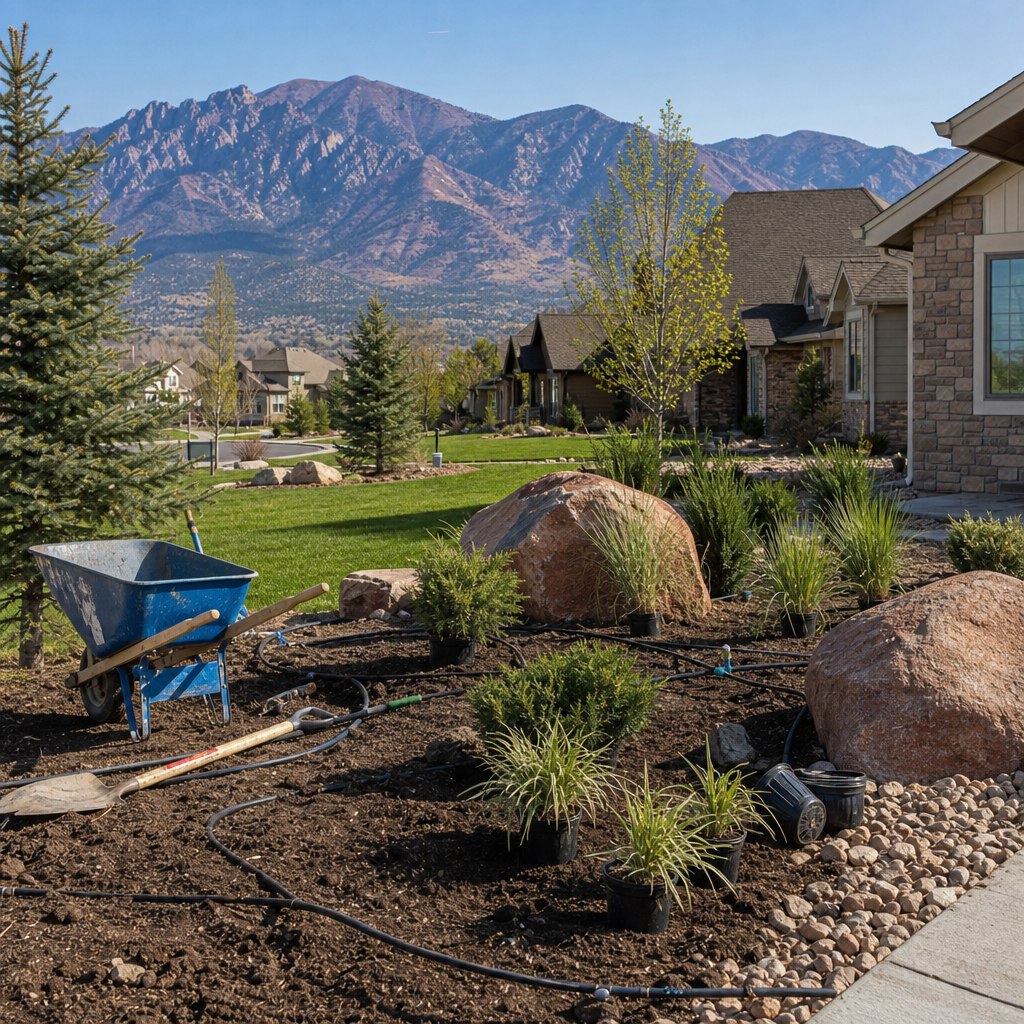
Spring brings the opposite problem: everything winter left behind becomes visible at once — broken branches from snow load, gravel and debris pushed onto turf, matted leaf litter, and beds full of collapsed perennial growth. Clearing that promptly matters because the growing season here is short, and a lawn or bed that spends its first weeks smothered has lost a meaningful share of the year.
Debris also conceals the things worth finding early: a limb that cracked under snow and has not yet fallen, irrigation damaged by freeze-thaw, or a bed that has washed out.
Decision property detail 2 in the Cleanup Scope sequence: project details
Leaf and debris removal. Leaves are cleared from lawns, beds, and hard surfaces, including the accumulations along fence lines and against structures where they pile deepest.
Cutting back. Perennials, ornamental grasses, and overgrown shrubs are cut back at the appropriate point in the season, and dead growth is removed.


Storm debris. Branches and limbs brought down by snow load are cleared, and anything left hanging is flagged for proper attention.
Bed restoration. Beds are weeded and tidied, edges re-defined, and mulch depth assessed and topped up where it has broken down or been displaced.
Lawn clearing. The lawn is cleared of matted material so that light and air reach it — particularly important in spring, when the growing season is short and every week counts.
Hard surfaces. Drives, walkways, and patios are cleared of debris and washed-in material.
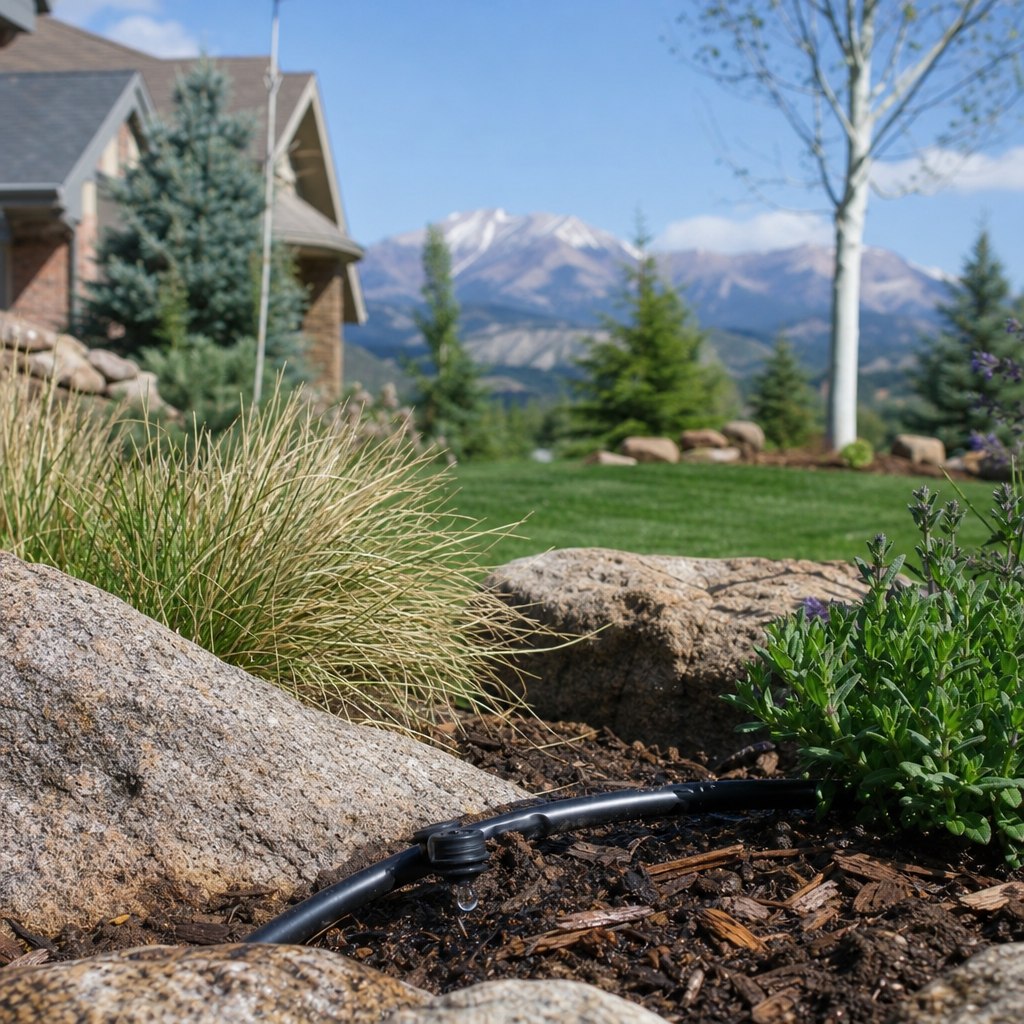
Irrigation check. Where relevant to the season, zones are run and inspected while the yard is clear and everything is visible.
The Colorado Springs cleanup is complete when documented green waste leaves the property.
Seasonal timing
Two cleanups a year suit most properties here, and both have a genuine deadline attached.
Autumn. The aim is to get leaves off the lawn before they are pinned down by the first significant snow. Because early snow can arrive while trees are still dropping, this often means more than one pass rather than a single tidy visit at the end of the season. This is also the natural moment to have irrigation winterised.
Spring. The aim is to clear winter debris and matted material quickly, so that a short growing season is not wasted. Spring is also when snow-load damage becomes visible and is best dealt with.
Properties with mature deciduous trees, slopes, or heavy exposure generally do better on recurring visits than on two large resets.
Decision property detail 1 in the Cleanup Scope sequence: Budget Inputs
Cost depends on the property size, tree cover and therefore leaf volume, how overgrown things are, the amount of debris and green waste to haul, and whether this is a one-time reset or a recurring visit. The dominant factor is usually how long it has been left. A maintained yard is priced as routine work; a property left for a year or more is a reclamation job, with the labour and volume that implies. Storm damage can turn a routine visit into a heavier one. Slope and access matter as well, since everything removed has to be carried out. We quote after seeing the property.
Timeline
Most residential cleanups are completed in a single visit. Heavy leaf cover, large lots, or significant storm debris may need longer, and autumn work is often better handled as more than one visit — there is little point clearing thoroughly while half the leaves are still on the trees.
Decision property detail 3 in the Cleanup Scope sequence: Timing Choices
Book a cleanup in autumn before snow settles the leaves onto the lawn, in spring as soon as the ground is workable, after a heavy snow event has brought debris down, or when preparing a property to sell or rent. If you are planning larger work — a xeriscape conversion, new sod, or an irrigation upgrade — a cleanup first is worthwhile, because designing against a yard you can actually see produces a better result.
Local note: irrigation and the Water Wise Rules
Where the season makes it relevant, part of a good cleanup is confirming that irrigation is intact and correctly programmed. Colorado Springs Utilities permits watering up to three days a week, Sunday to Saturday, with days of your choosing, and from May 1 to October 15 watering must be done before 10 a.m. or after 6 p.m. Water must not pool on hard surfaces or flow down gutters, and leaking sprinkler systems must be repaired within 10 days. A spring cleanup is the natural point to catch freeze damage and leaks while the yard is clear, well before the watering season is fully under way. (Source: Colorado Springs Utilities Water Wise Rules.)
Frequently asked questions
How should debris removal be documented? List the material types, estimated volume, access route, loading area, and whether the proposal calls for on-site staging or off-site disposal. Keep hard-surface cleanup separate: Colorado Springs Utilities allows washing hard surfaces only for public health and safety, and hoses must use a shut-off nozzle. The scope should also identify any irrigation damage found during cleanup because leaking sprinkler systems must be repaired within 10 days. This records the requested result without assuming hauling, disposal, response time, or included services before a provider confirms them.
Why does it matter if leaves stay on the lawn over winter? Under snow they mat into a dense layer that smothers the grass and encourages disease. The damage shows up in spring, when there is little time to recover it.
Can you set up recurring visits? Yes. Many properties here do best with recurring visits, particularly through autumn when leaf drop and early snow overlap.
Can you clear branches brought down by snow? Yes. Storm debris clearing is routine, and anything left hanging or damaged in the canopy can be assessed at the same time.
When should the autumn cleanup happen? Before significant snow settles the leaves onto the lawn. Because early snow can arrive while trees are still dropping, more than one pass is often the practical answer.
Will you check my irrigation while you are here? Where the season allows, yes — running the zones while the yard is clear is the easiest way to catch freeze damage and leaks early.
Sources
Colorado Springs Utilities — Water Wise Rules: csu.org/water-wise-rules.
Plan a documented yard cleanup from the Front Range field record
Project details and next steps
- No-Cost Scope ReviewThe initial scope review is offered without charge or a commitment to schedule work.
- Decision RecordThe approved scope and price are recorded before scheduling, with later changes documented separately.
Get a Free Quote
Note the grade, exposure, access, and Front Range project priorities.
Clarify the Front Range Work Area
Share the grade, exposure, access, timing, and intended use so the Colorado Springs scope can address the actual property.
Get a Free QuoteFrequently Asked Questions
Which exposure check comes first for yard-cleanup scope in Colorado Springs?
Compare the property's sunny, shaded and wind-exposed areas before setting the yard-cleanup scope scope. Also record slopes, downspout discharge and places where soil movement is visible, because one treatment may not suit every part of the lot.
Where can freeze-thaw movement alter this yard-cleanup scope scope?
Edges, joints, compacted bases and drainage low points deserve a close look. The proposal should identify any movement already present and separate corrective preparation from appearance work so the owner can see what the site actually requires.
What makes two Colorado Springs yard-cleanup scope proposals comparable?
Ask each proposal to state quantities, base or soil preparation, drainage handling, material specifications, access assumptions and final acceptance checks. Comparing those line items is more useful than comparing a single total with different work hidden underneath it.